
Art-directed conceptual editorial illustration created with AI. Figures, buildings, and scenes are illustrative, not documentary reconstructions.
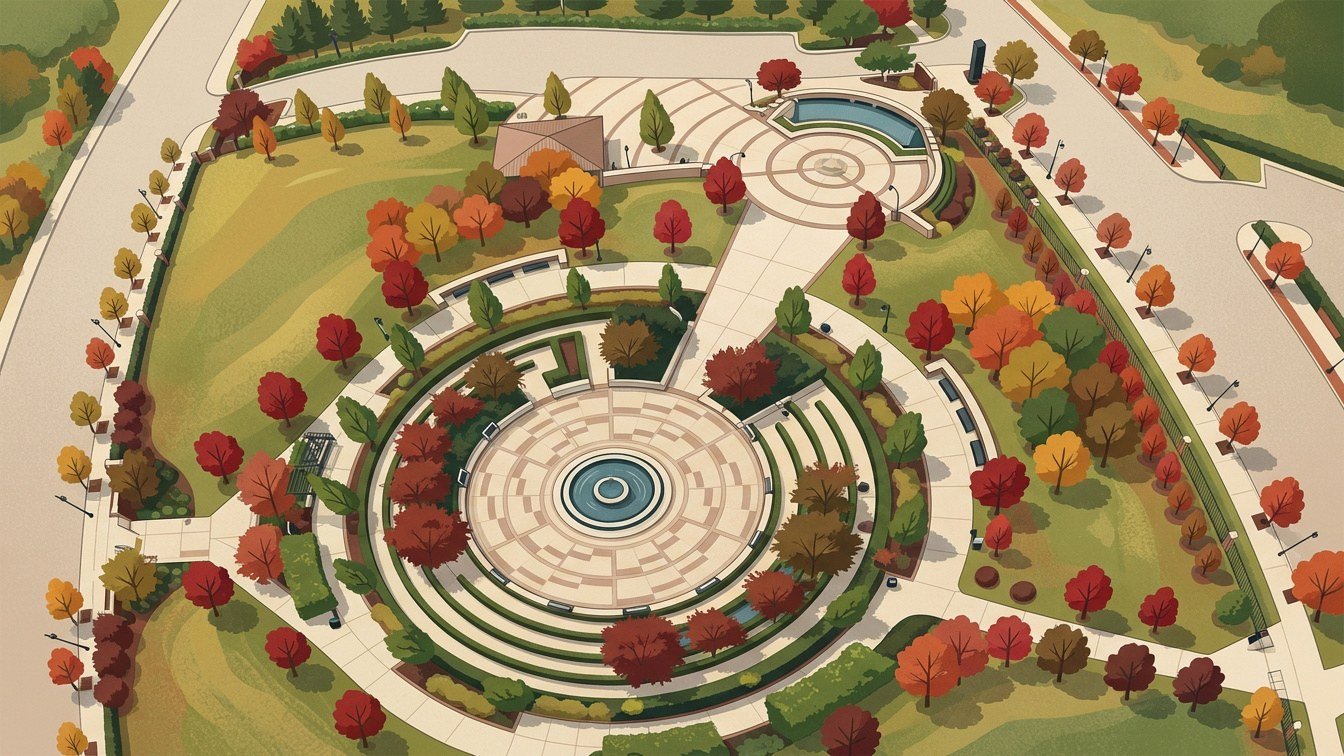
This series began with a question: How can we avoid the sins of the past when certain histories are deliberately erased?
The earlier parts complicate the premise. Greenwood’s history was never wholly erased. Survivors told it, the Black press printed it, and researchers kept returning to it. Some records were removed, others were never made, and institutional attention stayed away for decades. The better question is why the evidence took so long to receive sustained attention from the institutions that held power in 1921, and what a society owes the people whose losses it finally acknowledges.
This part follows that question through the record: what the 2001 state commission recommended, what Oklahoma enacted, what has and has not been paid, what the courts decided, and what remains open.
What the Commission recommended
The Oklahoma Commission to Study the Tulsa Race Riot of 1921 submitted its final report on February 28, 2001. Beyond its findings, it recommended five forms of redress:
- Direct payments to survivors.
- Direct payments to descendants of survivors.
- A scholarship fund for students affected by the massacre.
- An economic development enterprise zone in the historic Greenwood district.
- A memorial to the victims, including a place to bury any remains found.
The recommendations were not binding. They went to the governor and the Legislature, which decided what to enact.
What Oklahoma enacted
The Legislature’s response was the 1921 Tulsa Race Riot Reconciliation Act of 2001, carried as House Bill 1178. Its findings accept the Commission’s account, faulting officials who failed to stop the violence or took part in it, and noting that no one was convicted and that Greenwood property owners received no insurance payments. The Legislature said its response did not rest mainly on the state’s present legal liability. Instead, it chose to “freely acknowledge its moral responsibility.”
According to the Oklahoma Senate’s weekly summary, the Act addressed funding and a memorial site, created a Greenwood Area Redevelopment Authority to plan investment in the district, and set up an education and scholarship program that gives preference to direct descendants of people who lived in Greenwood in 1921. The Tulsa City-County Library’s history adds that lawmakers approved tax incentives for North Tulsa businesses. Available descriptions of the Act do not mention cash payments to survivors or descendants.
Three kinds of response
Three different things are often called reparations, and the record keeps them apart.
Direct compensation by government. Available reporting does not establish that the State of Oklahoma or the City of Tulsa has made direct compensation payments to survivors or descendants. When the city announced its Road to Repair plan in June 2025, news coverage reported that two survivors who attended the observance had never received compensation from the city or the state.
Private charitable payments. In 2002, the Reparations Gift Fund, distributed through Tulsa Metropolitan Ministry, paid nearly $28,000 to survivors in April and another $12,000 in August. At the time, 131 survivors were known. Available records do not say where the fund’s money came from. These were gifts, not government payments or damages.
Community investment. A scholarship, a memorial, a redevelopment plan, and a charitable trust invest in a community or honor its history. They may help descendants, but they do not compensate individuals for what was destroyed, and the Commission’s first two recommendations asked for exactly that.
The scholarship and the memorial
The scholarship program began in 2003. A June 2022 report by The Frontier found that the Legislature never set a required funding amount, that the State Regents put $30,000 to $50,000 a year into a trust fund starting in 2003, and that investment earnings paid for awards averaging eight $1,000 scholarships a year. The Regents stopped adding money in 2019. In 2022, lawmakers approved $1.5 million in new funding, bringing the fund to $2.3 million. A bill to give descendants preference and widen eligibility passed the House 68–19 that year but received no Senate floor hearing. Available reporting does not describe the program after 2022.
The memorial the Commission recommended became John Hope Franklin Reconciliation Park in Tulsa. The Tulsa library dates the memorial’s construction to November 2008, and local coverage reported its dedication on October 27, 2010—nearly a decade after the report.
The first lawsuit: Alexander v. Oklahoma
On February 24, 2003, survivors and descendants sued the State of Oklahoma, the City of Tulsa, and city police officials in federal court. On March 19, 2004, the Northern District of Oklahoma dismissed the case as time-barred. The Tenth Circuit affirmed on September 8, 2004.
The case turned on timing. Plaintiffs argued that their claims did not accrue until the Commission’s report appeared in February 2001, because a long silence had kept them from learning the full extent of government responsibility. They also argued that officials had concealed facts, including by manipulating the post-massacre grand jury and by making documents disappear. In the alternative, they asked the court to pause the limitations clock because of concealment, reliance on promises to rebuild Greenwood, and extraordinary circumstances such as racial hostility and lack of access to the courts.
The Tenth Circuit rejected the discovery argument. It reasoned that the plaintiffs knew of their injuries and their general cause immediately after 1921, and that a plaintiff does not need to know every defendant’s degree of fault for a claim to begin running. It rejected concealment as a basis for tolling because substantial information was available after the massacre, including more than a hundred lawsuits. It also found reliance on promises unreasonable given racial hostility at the time.
The court did accept part of the plaintiffs’ account. It held that extraordinary circumstances did justify pausing the limitations period for decades after 1921. It found those circumstances had faded by the 1960s, when civil rights legislation opened the courts to Black plaintiffs, and that the plaintiffs did not file within the time allowed after that. The courts decided that the claims came too late. They did not decide what happened in 1921.
The second lawsuit: Randle v. City of Tulsa
In 2020, Viola Fletcher, Hughes Van Ellis, and Lessie Benningfield Randle sued the City of Tulsa, the Tulsa Regional Chamber, the county commissioners, the county sheriff, and the Oklahoma Military Department. They relied on two state-law theories: that the defendants created a continuing public nuisance and that the defendants were unjustly enriched. The district court dismissed the case with prejudice on July 12, 2023. Van Ellis died on October 9, 2023, while the appeal was pending, and his personal representative carried his claim forward.
On June 12, 2024, the Oklahoma Supreme Court affirmed. Eight justices joined the majority opinion, written by Vice Chief Justice Rowe, and Justice Edmondson concurred in part and dissented in part. The court denied rehearing on September 9, 2024.
The opinion separates two questions. On the first, it accepted the survivors’ grievance. It cited the Commission’s findings that officials failed to contain the violence and that the mob destroyed more than 1,200 buildings, and it called the plaintiffs’ grievance “legitimate and worthy of merit.” It described the lingering social and economic harm as real but beyond what the courts could resolve, and said that remedy belongs to policymakers.
On the second question, it held that the pleaded claims did not provide a legal remedy. Public nuisance law did not reach the survivors’ grievances, in part because the plaintiffs alleged no current physical injury to property, and the remedies the Legislature authorized, such as prosecution, civil action, or abatement, cannot address harm from a century ago. The unjust enrichment claim failed because the plaintiffs alleged no fraud, abuse of confidence, or unconscionable conduct, no contract-like relationship with the defendants, and the money at issue came from third-party donors. The court declined to expand either doctrine.
So the highest state court acknowledged the wrong and held that these two claims could not remedy it. The opinion addresses only the claims before it.
The federal review
In January 2025, the Department of Justice released a review of the massacre under the Emmett Till Unsolved Civil Rights Crime Act. It found that the violence was a coordinated attack on Greenwood and identified no living perpetrator who could be prosecuted. The review closed the criminal track without opening a civil one; Part II covers that distinction.
Road to Repair and the Greenwood Trust
On June 1, 2025, Mayor Monroe Nichols announced a Road to Repair plan that includes the Greenwood Trust, a private charitable trust. The city’s stated goal is $105 million in assets, with most of the funding secured or committed by June 1, 2026. The city divides the goal into three funds:
- A $24 million Housing Fund for Greenwood and North Tulsa residents, including housing and homeownership benefits for survivors and their descendants.
- A $60 million Cultural Preservation Fund for improving buildings, reducing blight, and carrying out parts of the Kirkpatrick Heights-Greenwood Master Plan.
- A $21 million Legacy Fund, which the city’s Trust page describes as funding the development and acquisition of trust-owned land for the benefit of survivors and descendants. Other coverage of the announcement also lists scholarships and small business grants under this fund.
Alaina Beverly, the trust’s executive director, has said the effort is reparative but is not reparations. The trust is an investment plan. It does not pay damages to individuals.
The trust’s status is best stated by date, and four questions should be kept apart. As of October 7, 2026, ImpactAlpha reported:
- Fundraising total: Beverly declined to say how much has been raised. An undisclosed total does not mean nothing has been raised, and it does not mean the goal was met.
- Donor commitments: the article reported no specific commitments from donors or investors.
- Capital deployed: the trust had not yet deployed any capital.
- Payments: the article reported none.
The Nation likewise reported no fundraising total in June 2026. The trust’s own website, last modified March 6, 2026, displays a figure of $105 million labeled “Private Investment” without saying whether that amount has been raised, committed, or deployed. The June 1, 2026 benchmark has passed, and available reporting through November 22, 2026 does not say whether the $105 million goal, or the benchmark of having most of it secured or committed, was reached.
A separate effort comes from the city’s Beyond Apology Commission, whose members include City Councilor Vanessa Hall-Harper. In November 2024, the commission asked the mayor and council for a $24.9 million housing reparations program and a permanent funding source. Its December 2025 annual report does not describe the program as funded or adopted by the council, mentions no payments, and says the commission needed clarity on how its housing recommendations would fit the Greenwood Trust’s strategy. The Nation reported in June 2026 that Hall-Harper had proposed paying for housing reparations from the city’s $75 million housing fund, and described that proposal as pending.
Meanwhile, the city’s graves investigation, described in Part IV, continues to produce the most concrete public work: documented burials, two identifications (one confirmed as a massacre victim), and reburial plans.
Commemoration and restitution
Commemoration changes what a city says. Restitution changes what people have. Greenwood’s record includes much of the first: a park, a state acknowledgment of moral responsibility, a federal review, and an investigation into the graves. It includes much less of the second. The Commission recommended direct payments in 2001. Available reporting describes no such payments by the state or city in the twenty-five years since, and the one documented set of payments to survivors, in 2002, came from a private fund.
Neither kind of work substitutes for the other. Commemoration alone can become a way of closing a subject. Repair without public acknowledgment leaves the record unsettled. The evidence supports something narrower than a verdict on either: acknowledgment came in pieces, long after the people most affected had grown old, and Van Ellis died while his claim was still on appeal.
Returning to the question
If a history is not erased, why does it take so long to matter? In Greenwood’s case, the earlier parts point to several causes working together: what officials chose to investigate and prosecute, records that were removed or never made, schools and public institutions that said little, and courts that closed their doors on timing. The people most affected kept speaking through it all.
Greenwood’s history survived because people refused to stop telling it. Survivors preserved their testimony, descendants carried their memories, and researchers reconstructed records that institutions had long neglected. More than a century after the massacre, the historical evidence is extensive, and Oklahoma has acknowledged a moral responsibility. The question of material restitution remains unresolved. Remembering Greenwood is part of the work. What institutions do with that knowledge is another.
Explore the records yourself
- U.S. Department of Justice, Civil Rights Division, review of the 1921 Tulsa Race Massacre (January 2025): https://www.justice.gov/crt/media/1383756/dl
- Oklahoma Commission to Study the Tulsa Race Riot of 1921, final report: https://www.okhistory.org/research/forms/freport.pdf
- 1921 Tulsa Race Riot Reconciliation Act of 2001, findings (74 O.S. § 8000.1): https://law.justia.com/codes/oklahoma/title-74/section-74-8000-1
- Randle v. City of Tulsa, 2024 OK 40: https://hallapproved.com/ok/cases/supreme/2024/9835110/
- Alexander v. Oklahoma, 382 F.3d 1206 (10th Cir. 2004): https://law.counselstack.com/opinion/alexander-v-oklahoma-ca10-2004
- City of Tulsa, Road to Repair and the Greenwood Trust: https://www.cityoftulsa.org/mayor/road-to-repair/the-greenwood-trust/
Sources
- Oklahoma Commission to Study the Tulsa Race Riot of 1921, final report (February 28, 2001).
- 74 O.S. § 8000.1 (findings of the 1921 Tulsa Race Riot Reconciliation Act of 2001); Oklahoma Senate weekly summary, May 21–24, 2001.
- Tulsa City-County Library, “Section 3: After the Massacre” (Reparations Gift Fund payments, memorial dates, 1997 resolution): https://www.tulsalibrary.org/node/233243
- The Frontier, “After more than 20 years, a scholarship to help students harmed by the Tulsa Race Massacre has new funding” (June 23, 2022).
- Public Radio Tulsa, “Reconciliation Park” (October 27, 2010); Clio entry on John Hope Franklin Reconciliation Park.
- Alexander v. Oklahoma, 382 F.3d 1206 (10th Cir. 2004); Civil Rights Litigation Clearinghouse docket summary (4:03-cv-00133, N.D. Okla.).
- Randle v. City of Tulsa, 2024 OK 40, 556 P.3d 612 (rehearing denied September 9, 2024); NonDoc, June 12, 2024; ABA Journal; Federalist Society commentary.
- U.S. Department of Justice, Civil Rights Division, January 2025 review.
- City of Tulsa, Road to Repair announcement (June 1, 2025) and Greenwood Trust page.
- ImpactAlpha, “Greenwood Trust aims to rebuild the wealth of Tulsa’s Black Wall Street” (October 7, 2026).
- News9, “Alaina Beverly to lead Greenwood Trust’s $105M campaign” (October 24, 2025).
- The Black Press / San Diego Voice & Viewpoint, coverage of the June 2025 announcement.
- The Nation, “Tulsa at a Crossroads” (June 10, 2026).