
In 2026, the familiar search-and-click way of using the internet is changing fast.
The era of blue links is giving way to a more personal approach. Agent-driven discovery focuses on your intent rather than keywords, and it combines information instead of only pointing you to it.
The web is shifting from something you explore to something that can work for you.
1. The Rise of Agentic Browsers and Personal AI
Agentic browsers are a growing way to use the web alongside traditional search engines.
These browsers don’t wait for you to type a question. Instead, they try to work out what you want to achieve.
These systems began as experiments in 2024 and 2025, and they improved quickly as companies saw that people often prefer fewer decisions to more results. Early projects such as Google DeepMind’s Project Mariner placed AI agents directly in browsers, enabling them to perceive, reason, and act.
In practice, this means agents can:
- Access private data sources (cloud drives, notes, emails) to detect gaps in a task
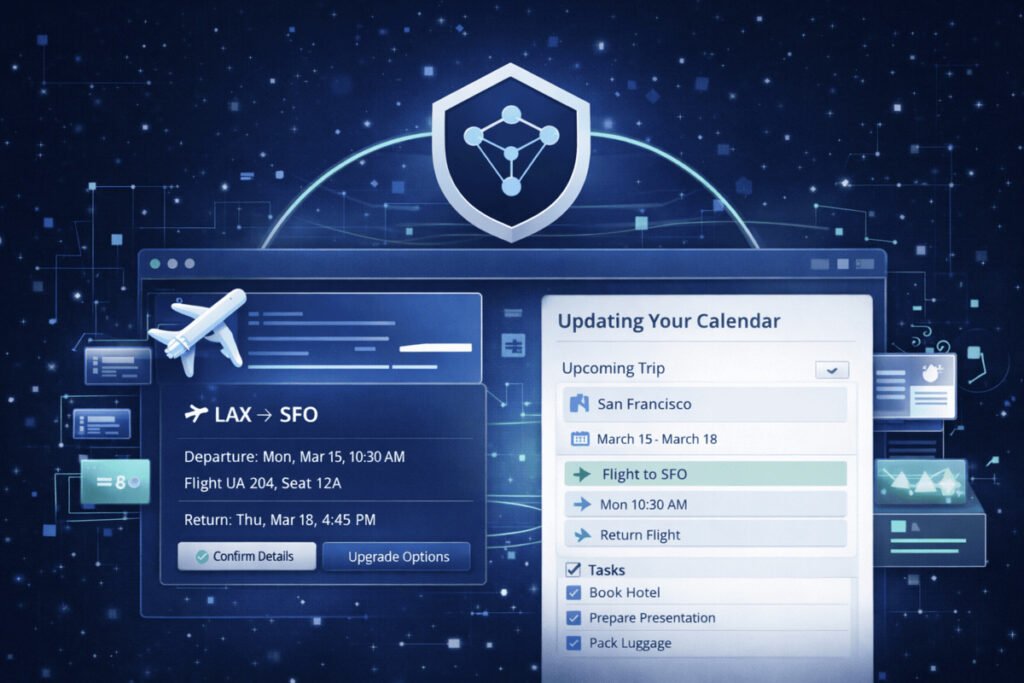
- Navigate third-party websites to book flights, reorder supplies, or complete workflows
- Deliver end-to-end synthesized outcomes rather than lists of links
More interactions are becoming conversational, context-based, and ongoing.
This kind of discovery can feel smooth and effortless.
2. The Perceptive Interface: A Fluid Web
Many sites now adapt their layout and content to the visitor, and more will.
Discovery increasingly runs through what you might call a perception layer, a real-time system that adjusts content to your behavior, device, and goals. Layouts shift, images update, and content changes automatically.
Two people can visit the same web address and have different experiences.
This layer has also sped up the growth of zero-click answers. More often, AI agents extract, summarize, and present answers immediately, often inside tools such as ChatGPT or Perplexity, without sending you to the original source.
For users, this looks like a convenience. For publishers, it’s a significant challenge.
Discovery now happens more in the background, so it’s less about where you go and more about what you get.
3. From SEO to GEO: Optimization in the Agentic Age
Search engine optimization still matters, and a new layer has joined it.
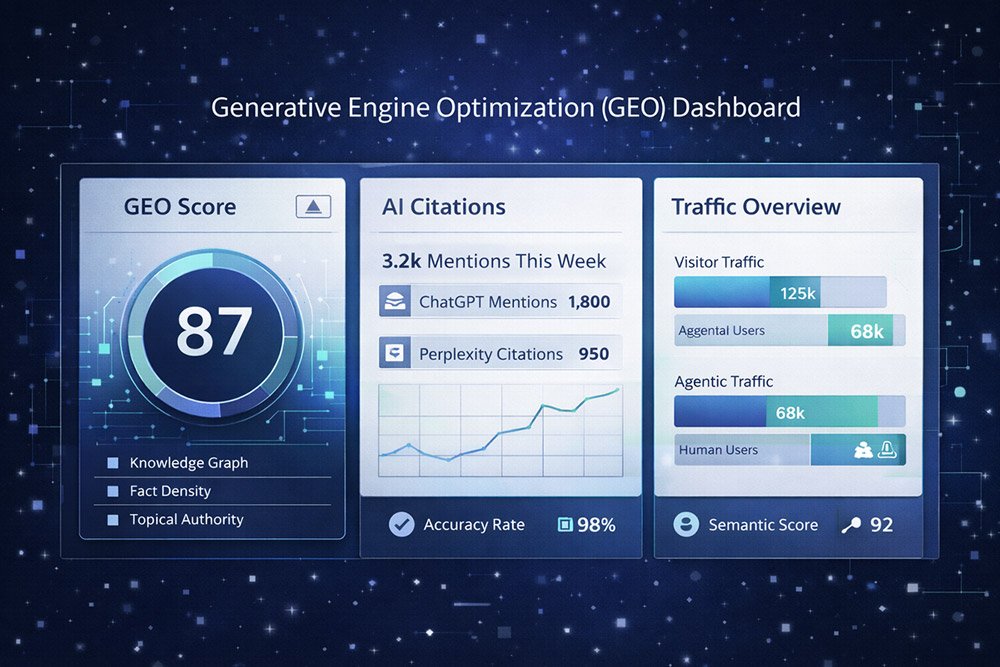
Generative Engine Optimization (GEO) and Answer Engine Optimization (AEO) aim to make a site a source that AI systems cite, not only a page that ranks.
For many brands, being cited is becoming as valuable as ranking.
Winning in this environment calls for:
- Machine-verifiable authority through structured knowledge graphs
- High fact density and semantic coverage, not bloated keyword scaffolding
- Clear entity definitions that AI models can resolve with confidence
Tools once built for SEO checks are finding new uses. Platforms such as Clearscope and MarketMuse assess how completely a page covers a topic, not only how often it repeats a keyword.
Getting visitors is still essential, but earning influence is worth even more.
4. Technical Foundations: Talking to the Machines
If machines can’t read your website, it’s almost as if it doesn’t exist.
Structured data, especially JSON-LD, helps both people and agents understand what a page is about. You write the content once, and many systems can use it.
Useful technical practices include:
- Schema markup such as Article, Product, and Organization, to state what a page contains
- Entity clarity, reinforced through about, mentions, and sameAs relationships
- Visible trust signals tied to experience, expertise, authority, and trustworthiness
Conversational and voice interfaces also reward writing that sounds natural when spoken aloud. Clear, direct explanations serve every kind of reader.
5. The Closed Border Response
Not everyone welcomed the shift to agentic systems.
As AI-generated summaries drew attention away from publishers, many reported falling traffic, and some pushed back. The result is what some call the closed border web.
More high-value journalism, research, and niche expertise now sits behind:
- Subscription walls
- Authenticated APIs
- Explicit licensing agreements for AI access
The closed border is creating a split web:
- A public layer, optimized for agents and summaries
- A private layer, optimized for humans willing to pay for depth, nuance, and originality
Strangely, the split has made truly human work more valuable. Scarcity returned not because information disappeared, but because getting permission to use it became important.
An Analogy for Understanding
The old web was like a vast library where you wandered the aisles, pulled books, flipped pages, and hoped you were in the right section.
The web in 2026 is more like having a personal researcher who has read every book, plus your notes, emails, and calendar. You say what you want once. The researcher provides a complete answer, cites sources, sets up follow-ups, and handles the tasks you mentioned earlier.
The agentic era is about smarter delegation, not only faster searching. Like any researcher, an agent can make mistakes, so check its answers against the original sources.
Related: McKinsey & Company, The economic potential of generative AI