

Vetting doctors is a must. The medical white coat is not automatically a shield or a symbol of safety, competence, and implicit trust, as most of us grew up believing. You booked an appointment, you showed up, and you handed over your body to a stranger because the system suggested you should.
But the landscape of healthcare has changed. It has become a maze of “reputation management” firms, opaque billing structures, and private equity acquisitions of medical practices.
If you have ever been told “it’s probably stress,” or “your labs look normal” while you are in pain, you know why medical gaslighting has become a common term among patients. Feeling dismissed erodes dignity, and it can persist when patients see the doctor as the authority figure and themselves as the passive recipient.
This guide flips that dynamic. It is a method for Investigative Living, Pillar III: Vetting doctors using public data to check the record of the person holding the stethoscope.
Public records show licenses, discipline, and industry payments. They don’t measure bedside manner or clinical skill, and a clean record doesn’t guarantee good care. Treat what you find as questions to ask, not verdicts. This guide is general information, not medical or legal advice. Last reviewed November 2026.
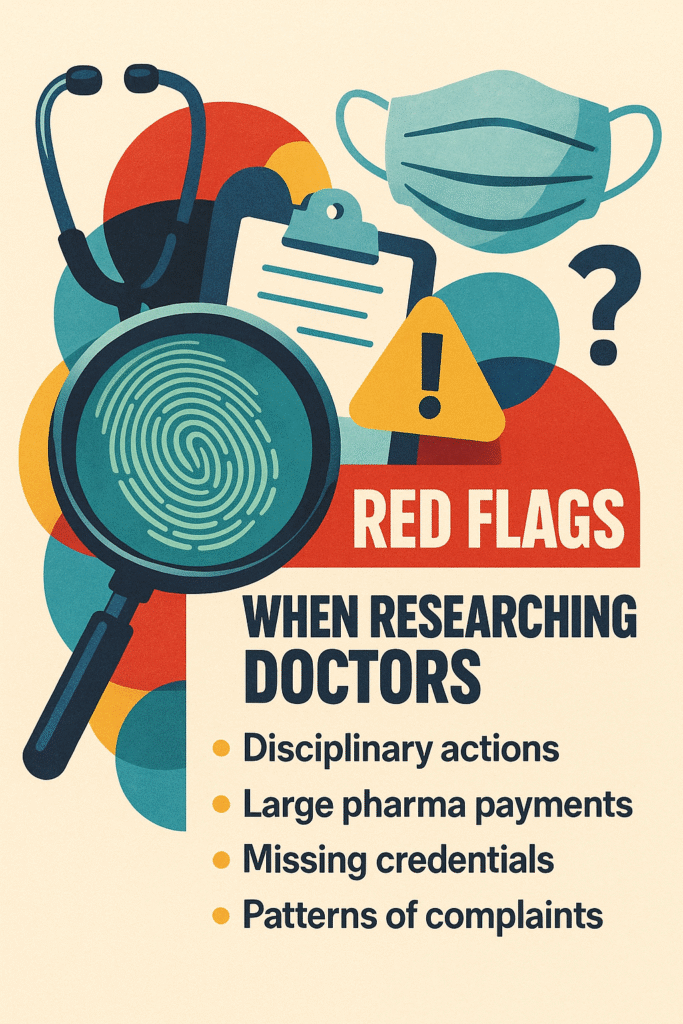
Phase I: The License Audit (The Official Record)
Every doctor has a medical license, and each license has its own history.
Hospital biographies are marketing documents. They list accolades, fellowships, and smiling photos, and they rarely mention probation orders, suspensions, or other board actions. To find those, bypass the hospital and go to the state medical board.
The Tool: DocInfo.org (Federation of State Medical Boards) or your own State Medical Board website.
The Workflow:
- Start with DocInfo: This is a national database built from licensing and disciplinary data that state medical boards send to the Federation of State Medical Boards. It’s a quick way to check for disciplinary actions, but boards report on different schedules, so the record may not be current.
- Drill Down to the State: If you see a flag, or want to be thorough, search for “[your state] medical board license lookup” and confirm the license is active.
- The “Public Documents” Tab: Once you find the doctor’s profile, look past the status summary. Look for tabs or links labeled “Public Documents,” “Administrative Actions,” or “Enforcement Documents.”
- Check Board Certification: Use ABMS Certification Matters to see whether the doctor is certified by one of the American Board of Medical Specialties member boards. Certification is separate from a license.
What to Look For:
You are looking for PDF documents. These are legal orders, often written in dry, bureaucratic language. Scan them for these specific terms:
- “Stipulated Settlement”: An agreed resolution with the board, often reached to avoid a hearing. Read what the doctor admitted or agreed to.
- “Probation”: They are practicing, but under supervision due to past errors or misconduct.
- “Surrender”: A serious red flag. It can mean the doctor gave up their license voluntarily while a board matter was pending, so read the order to see why.
Insight: One old board action might be a single bad stretch. A pattern of “negligence” or “record-keeping failures” is a warning.
A note on malpractice: The National Practitioner Data Bank collects malpractice payment reports, but the general public does not have access to it. Whether a state board shares malpractice information varies, so check what yours posts.
Phase II: The Financial Audit (Conflict of Interest)
Your doctor might care about you a great deal. They might also receive meals, speaking fees, or consulting payments from drug and device companies.
Federal law now requires drug and device makers to report payments to doctors. The Open Payments database, run by the Centers for Medicare & Medicaid Services, publishes the dollar amounts.
The Tool: OpenPaymentsData.cms.gov
The Workflow: Search the doctor’s name. Payments are sorted into categories, such as:
- Food and Beverage: Look at the total and how often it recurs, not a single lunch.
- Consulting Fees / Honoraria: Pay closer attention here. If a doctor receives large, repeated payments from the maker of the implant or drug they recommend, it’s reasonable to ask: Is this the best treatment for me, and are there alternatives?
- Research Payments: These often reflect clinical trial work, but they are still worth noting.
The Context: A payment is not proof of corruption, and it doesn’t show that your treatment advice was influenced. But suppose your dermatologist prescribes a brand-new, expensive cream when a generic is available, and Open Payments shows large payments from the manufacturer of that cream. Then you have the context to ask whether a cheaper alternative would work. Check the payment year and the company before drawing any conclusion.
Phase III: The “Real” Reviews (The Reddit Protocol)
Commercial review sites like Healthgrades or Vitals can be incomplete or curated, and a handful of reviews rarely tells the whole story.
To find patient stories, I use Reddit. It is messy and unfiltered, and the posts are anecdotes, not verified facts. Use them to spot patterns worth asking about, not to reach a verdict.
The Search Queries:
- site:reddit.com “[Doctor Name]” “[City]”
- site:reddit.com “[Clinic Name]” billing
- site:reddit.com “[Hospital Name]” “medical gaslighting”
What to Look For: I am not looking for star ratings. I am looking for patterns in behavior.
- Do multiple threads mention “rushed appointments”?
- Is there a pattern of “surprise bills” or “out-of-network” assistants?
- Do patients consistently mention being interrupted or dismissed?
Pro Tip: Check your local city’s subreddit (e.g., r/Austin, r/Boston). People often ask for doctor recommendations there, and the comments section becomes a goldmine of “Avoid Dr. X” stories that never make it to Google Maps.
Phase IV: The Ownership Check (Private Equity)
In recent years, Private Equity (PE) firms have been buying independent physician practices, including in dermatology, gastroenterology, and ophthalmology.
Why does this matter? A 2022 JAMA Health Forum study of dermatology, gastroenterology, and ophthalmology practices found that after private equity acquisition, charges per claim rose about 20% and allowed amounts about 11% compared with similar independent practices. The study looked at prices and visit patterns, so it can’t tell you whether care is better or worse at any one practice.
How I Spot It: The website looks “local,” but the ownership is corporate.
- Search: “[Practice Name]” + “acquisition” OR “private equity”.
- Check the “Careers” Page: If the job listings redirect to a massive management company you’ve never heard of, the practice is likely part of a corporate chain.
- The “Provider” Shuffle: If the website lists 20 doctors but you can never see the same one twice, that can be a sign of a high-volume corporate model.
If a practice is PE-owned, I ask more questions about pricing and billing before I book.
Conclusion: Vetting Doctors as Self-Respect
After these searches, I don’t ask if the person is perfect. Doctors are human. They are overworked and fallible. Instead, I question their incentives.
Do I trust that they are prescribing this drug because it works, or because of the consulting fee? Do I trust that their “clean record” is actually clean, or just hidden behind a settlement I found in a PDF search?
Researching and vetting doctors is not an attack. It is an act of self-respect. It allows you to walk into the exam room not as a passive recipient of care, but as an informed partner. When everything feels confusing, knowing how to search well is your best defense.
The Patient Investigator’s Toolkit for Vetting Doctors
1. Disciplinary Checks
- DocInfo.org: The Federation of State Medical Boards’ national database of licensing and disciplinary records. A good first step.
- State Medical Boards: Search “[your state] medical board license lookup” to find the official search tool. This is where the PDF disciplinary orders live. California readers can start at the Medical Board of California.
- ABMS Certification Matters: Check whether a doctor is board certified.
2. Financial & Corporate Vetting
- OpenPaymentsData.cms.gov: The federal database of payments from drug and device manufacturers to physicians.
- ProPublica “Dollars for Docs”: A historical snapshot of payments from 2013 to 2018. ProPublica says it was last updated in October 2019, so use Open Payments for current data.
3. Safety & Quality Grades
- Leapfrog Hospital Safety Grade: Grades hospitals specifically on safety (infection rates, accidents), not just “prestige.”
- Turquoise Health: A tool for comparing prices hospitals have posted publicly. Coverage varies by hospital.
Sources